Sudan,
Conflict
X
the Contradiction
of Leaving
October 18, 2024
3 min read
Khartoum, Conflict & the Contradiction of Leaving
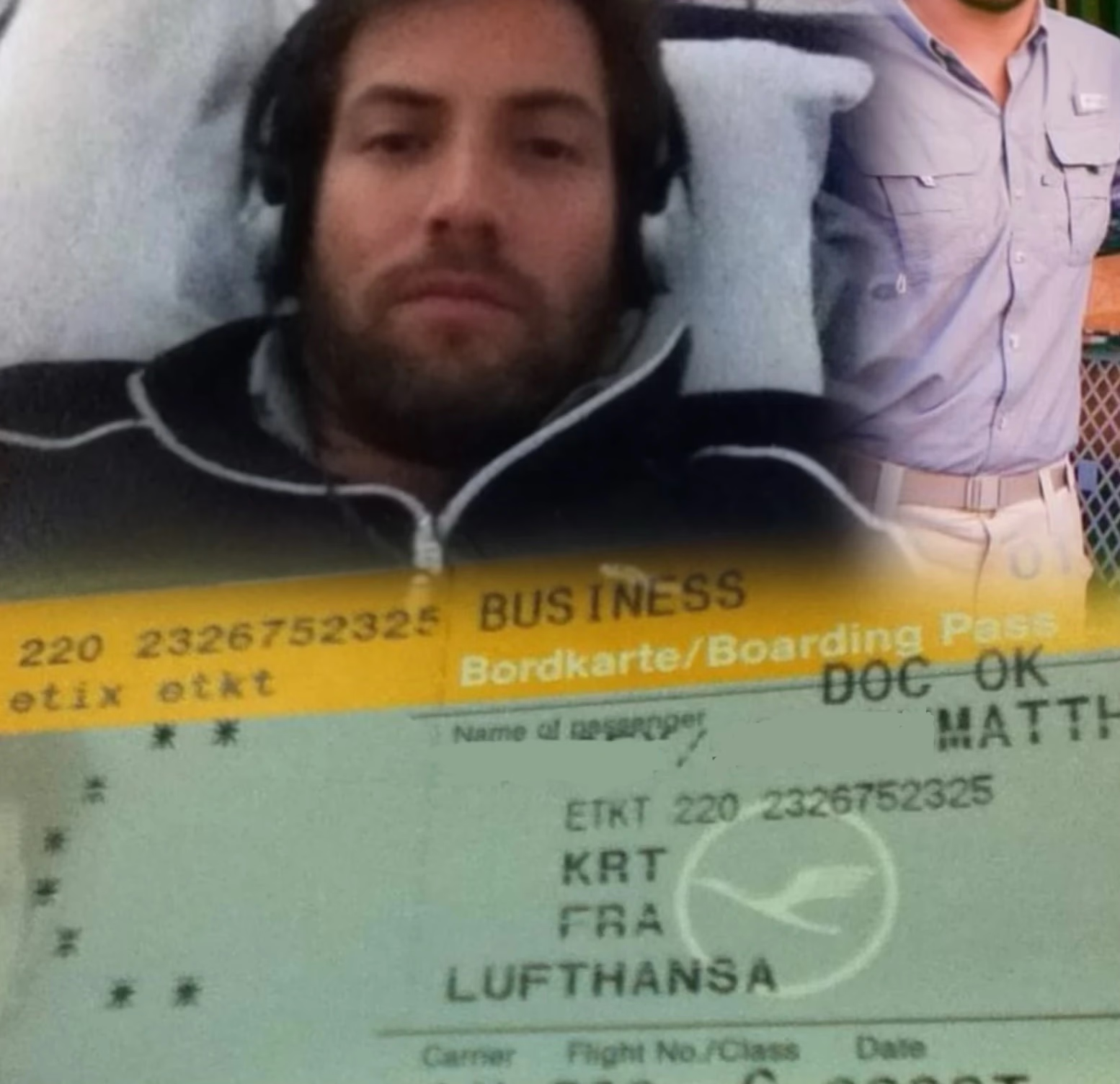
Upon my return to Khartoum Airport, I was unexpectedly upgraded to business class. As I boarded the plane bound for Germany, the contrast struck me like a blow to the chest — the quiet luxury of my seat against the memory of dirt floors and dawn prayers echoing through the city. A tide of emotion rose. I knew I would never see some of the remarkable people I had met again. I sat there, overwhelmed, when a stewardess asked gently, “Sir, are you alright?”
I wasn’t.
Because what do you say, really, when you’re offered champagne in the sky, but your heart is still anchored in the chaos of South Kordofan — with children, soldiers, and farmers who carry on in the shadow of war?
During my time in Sudan, I had the opportunity to contribute to water infrastructure projects, including the installation of filtration systems that delivered clean water to villages long neglected. These projects didn’t just improve health — they fortified communities, offering resilience against disease and even insurgent pressure. I’ll never forget the gratitude in the villagers’ eyes. Nor the tension just beneath it.
The Weight of Witnessing
My travels through conflict zones — Sudan, parts of the Horn of Africa, the Congo — gave me a front-row seat to the devastating toll of war and the fragility of hope. I saw the effects of censorship and the systematic suppression of democratic voices. I also saw what resource extraction really looks like when it benefits the few and devastates the many.
The colonial legacy of nations like France, the UK, and the Netherlands continues to ripple through Africa. In countries like Cameroon, Gabon, Chad, and Congo-Brazzaville, foreign influence props up oligarchies, often in exchange for access to oil, diamonds, uranium, or timber. These regimes survive — and often thrive — on dependency, not democracy. But the people? They are increasingly pushing back. In the age of connectivity, narratives are harder to control.
I saw it in conversations whispered in cafes. In youth movements swelling beneath the surface. In the simple act of a father showing me his homemade water system and saying, “Now my daughter won’t get sick.”
Northeast Africa: A Fragile Prize
Sudan is rich with resources — gold, gas, uranium, hydropower — and equally rich with conflict. Egypt, Ethiopia, Eritrea, and Djibouti all hold strategic cards in the region, whether through location, minerals, or influence. Russia’s Wagner Group, the UAE’s economic interests, and China’s infrastructure deals all converge here, making Northeast Africa a powder keg of global ambition.
From the proposed Russian naval base in Port Sudan to the UAE’s support for paramilitary forces, the scramble for control continues under new flags. The headlines speak volumes:
“Wagner-linked companies extract $250M in African gold and minerals”
“Ukrainian special forces clash with Russian mercenaries in Sudan”
“The UAE deepens its military reach across the Red Sea coast”
The lines of influence may shift, but the power dynamics remain eerily familiar. This time, it's not colonial flags — it's corporate logos and private armies.
The Human Thread
Through all of it, one truth stays with me: people want peace. They want clean water, education, safety, and dignity. The tragedy is not that they lack resilience — it’s that the world too often sees their lives as bargaining chips.
I don’t write this to posture or provoke. I write because I was there. Because I left a piece of myself behind in Sudan. Because the future of these regions — and the choices we make about them — matter.
What we ignore today will come back tomorrow. And sometimes, the clearest compass is found in the stories of the lost.